


One of the most common questions gardeners ask is:
“If organic fertilisers are slow release, how often should I feed my plants?”
The answer may surprise you.
While organic liquid fertilisers release nutrients more gradually than synthetic fertilisers, they do not continue feeding plants indefinitely. In most garden soils, a significant portion of the available nitrogen is released over approximately 7–14 days, depending on temperature, moisture, microbial activity and soil conditions.
Why Organic Fertilisers Work Differently
Synthetic fertilisers often contain nutrients that are immediately available to plants. Organic fertilisers work differently.
The nutrients first need to be processed by beneficial soil microorganisms. These microbes gradually convert organic nitrogen into plant-available forms, creating a steadier nutrient supply and reducing the risk of sudden growth flushes.
This process is one of the reasons many gardeners prefer organic fertilisers. Nutrients are released in a way that better matches natural plant growth.
The 10-Day Rule
Many growers find that feeding approximately every 10 days aligns well with the natural nutrient release pattern of liquid organic fertilisers.
By the time much of the previous application has been processed by soil microbes, a fresh application helps maintain a consistent nutrient supply.
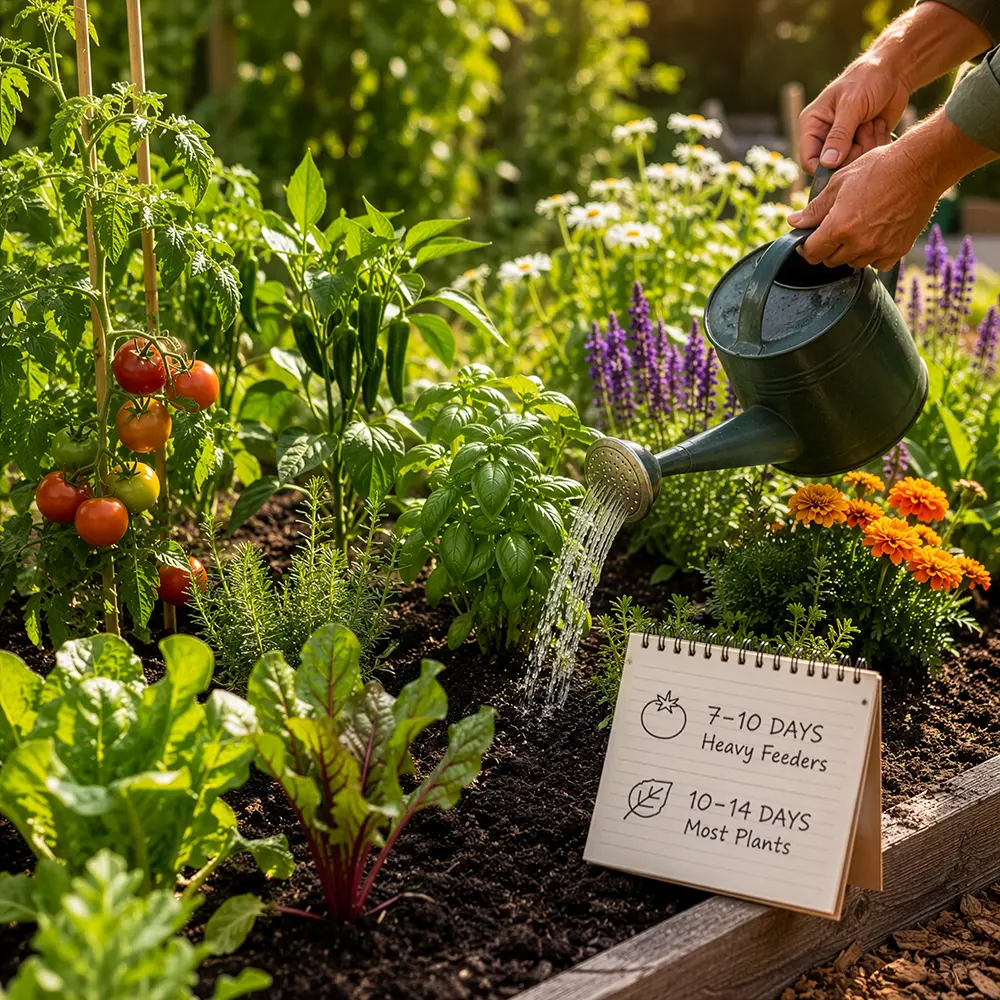
For most garden plants, vegetables and fruiting crops, feeding every 10–14 days is a practical and effective schedule.
Feeding Frequency by Plant Type
Tomatoes, Chilli Peppers and Other Heavy Feeders
Tomatoes, peppers, cucumbers, pumpkins and other vigorous crops benefit from regular feeding during the growing season.
A feeding interval of 7–10 days often produces the best results during periods of active growth, flowering and fruit development.
Vegetables, Herbs and Flowering Plants
Most garden vegetables, herbs and ornamental plants perform well when fed every 10–14 days throughout the growing season.
Perennials, Shrubs and Trees
Established perennials, shrubs and young trees generally require less frequent feeding.
An application every 2–4 weeks is often sufficient, especially when growing in healthy soil with added compost or mulch.
What Happens If You Wait Too Long?
Plants rarely show immediate nutrient deficiencies. Instead, growth often slows gradually.
You may notice:
- Reduced vigour
- Smaller leaves
- Less flowering
- Lower yields
- Reduced fruit production
Regular feeding helps maintain consistent growth and prevents plants from falling behind during the peak growing season.
A Practical Feeding Schedule
For many gardeners, a simple routine works well:
- Mix your organic liquid fertiliser with water according to the label.
- Apply around the root zone.
- Repeat every 10–14 days.
- During periods of rapid growth, consider feeding every 7–10 days.
Consistency is often more important than increasing dosage.
The Bottom Line
Organic liquid fertilisers are slow release compared to synthetic fertilisers, but they still need to be replenished regularly.
For most plants, feeding every 10–14 days provides a reliable nutrient supply. Heavy feeders such as tomatoes and chilli peppers may benefit from feeding every 7–10 days during peak growth.
A regular feeding schedule helps support strong roots, healthy growth, flowering and productive harvests throughout the season.

Leave a comment
All comments are moderated before being published.
This site is protected by hCaptcha and the hCaptcha Privacy Policy and Terms of Service apply.