


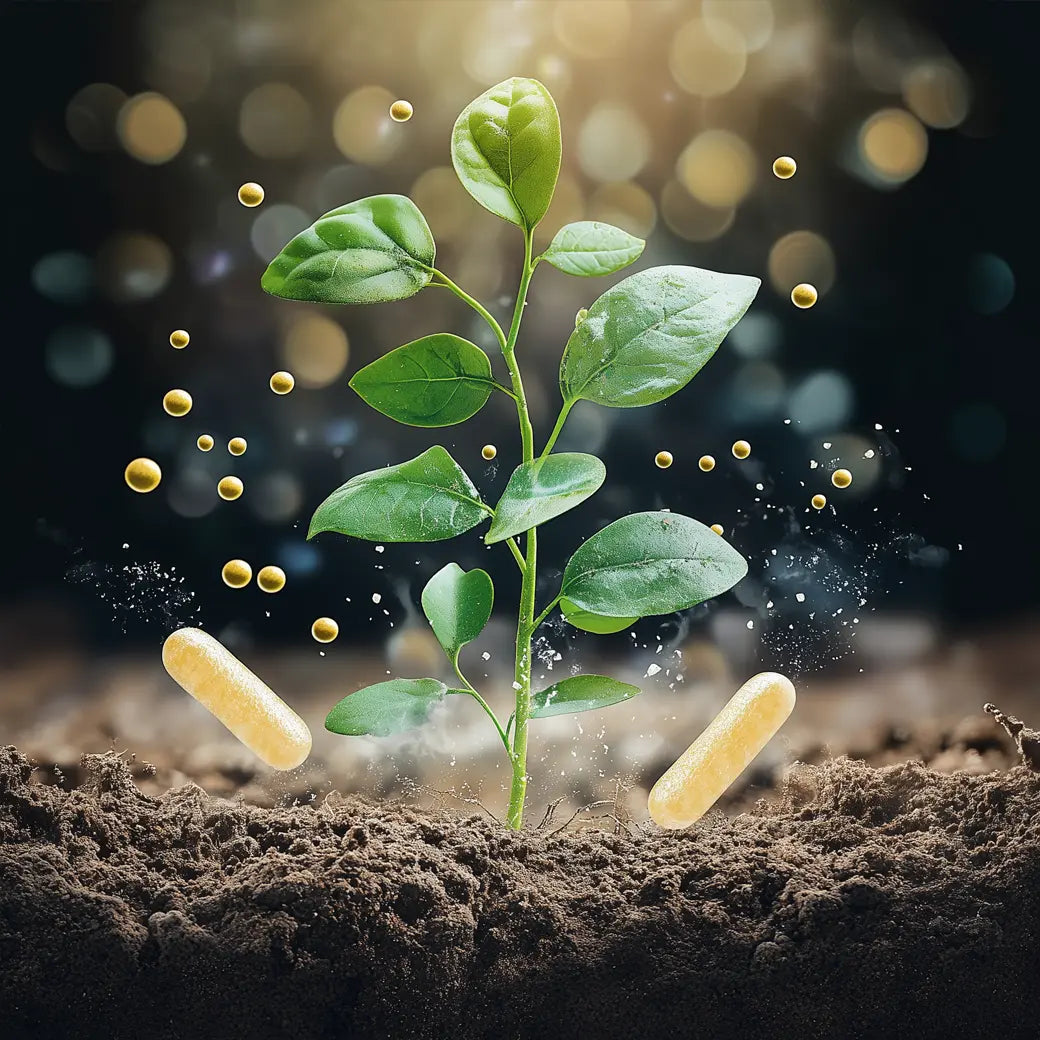
The Advantages of Humic and Fulvic Acids for Plant Growth
Humic and fulvic acids are naturally occurring organic compounds formed through the decomposition of plant material. In organic growing, they are widely recognised for their ability to improve soil health, enhance nutrient availability, and strengthen plant resilience.
Think of humic and fulvic acids as sponges in the soil — they absorb water and nutrients, hold onto them, and gradually release them exactly where plants need them most.
Below is a closer look at how humic and fulvic acids work and why they play such an important role in modern organic fertilisation.
What Are Humic and Fulvic Acids?
- Humic acid: A larger, stable molecule that remains in the soil, improving structure, water retention, and nutrient buffering.
- Fulvic acid: A smaller, highly soluble molecule that can enter plant cells and transport nutrients directly into plant tissues.
Both substances are key components of humus — the organic fraction of soil responsible for long-term fertility and biological activity.
Benefits of Humic and Fulvic Acids for Plants
- Enhanced nutrient uptake: Fulvic acid acts as a natural chelator, binding nutrients such as iron, magnesium, and zinc and keeping them available for plant absorption.
- Improved soil health: Humic acid improves soil structure by binding soil particles, increasing aeration and water-holding capacity — particularly valuable in sandy or heavy clay soils.
- Stronger root development: Both acids stimulate root cell division and elongation, resulting in more extensive and resilient root systems.
- Increased microbial activity: Humic substances feed beneficial soil microorganisms, supporting nutrient cycling and natural disease suppression.
- Greater stress tolerance: Plants treated with humic and fulvic acids show improved resistance to drought, salinity, heat, and other environmental stresses.
- Improved plant metabolism: Fulvic acid enhances internal nutrient transport, supporting photosynthesis, respiration, and overall plant vitality.
How Humic and Fulvic Acids Are Applied
Humic and fulvic acids are included in all GARDEN GOLD liquid fertiliser formulations and can be applied in two complementary ways:
- Soil application: Improves soil fertility, structure, and nutrient retention over time.
- Foliar application: Delivers nutrients directly through the leaves for rapid uptake and visible response.
Feed Smarter with a Complete Feeding System
To fully benefit from humic and fulvic acids throughout the growing season, they work best when applied consistently as part of a structured feeding approach.
The GARDEN GOLD Feeding Programs combine soil nutrition with targeted foliar feeding, ensuring humic and fulvic acids support both root health and above-ground growth.
- Houseplant Feeding Program – for strong, resilient indoor plants
- Garden Feeding Program – for productive outdoor beds and borders
- Tomato & Chile Feeding Program – for fruiting and high-demand crops
This integrated approach is exactly how humic and fulvic acids are used within the GARDEN GOLD Feeding Programs, delivering reliable results without guesswork.
Conclusion
Humic and fulvic acids are powerful, nature-derived tools for improving soil fertility, nutrient efficiency, and plant resilience. By supporting both the soil ecosystem and internal plant processes, they help create healthier plants and more balanced growing systems.
Used consistently within a complete feeding program, humic and fulvic acids form a strong foundation for sustainable, high-performance organic growing.

Leave a comment
All comments are moderated before being published.
This site is protected by hCaptcha and the hCaptcha Privacy Policy and Terms of Service apply.